Winter Car Emergency Kit Checklist
Disclosure: This page contains affiliate links. If you buy through them we may earn a commission at no extra cost to you. As an Amazon Associate I earn from qualifying purchases. Details.
This list merges the official checklists from NHTSA, Ready.gov, and the National Weather Service. Items in bold appear on at least two of those lists.
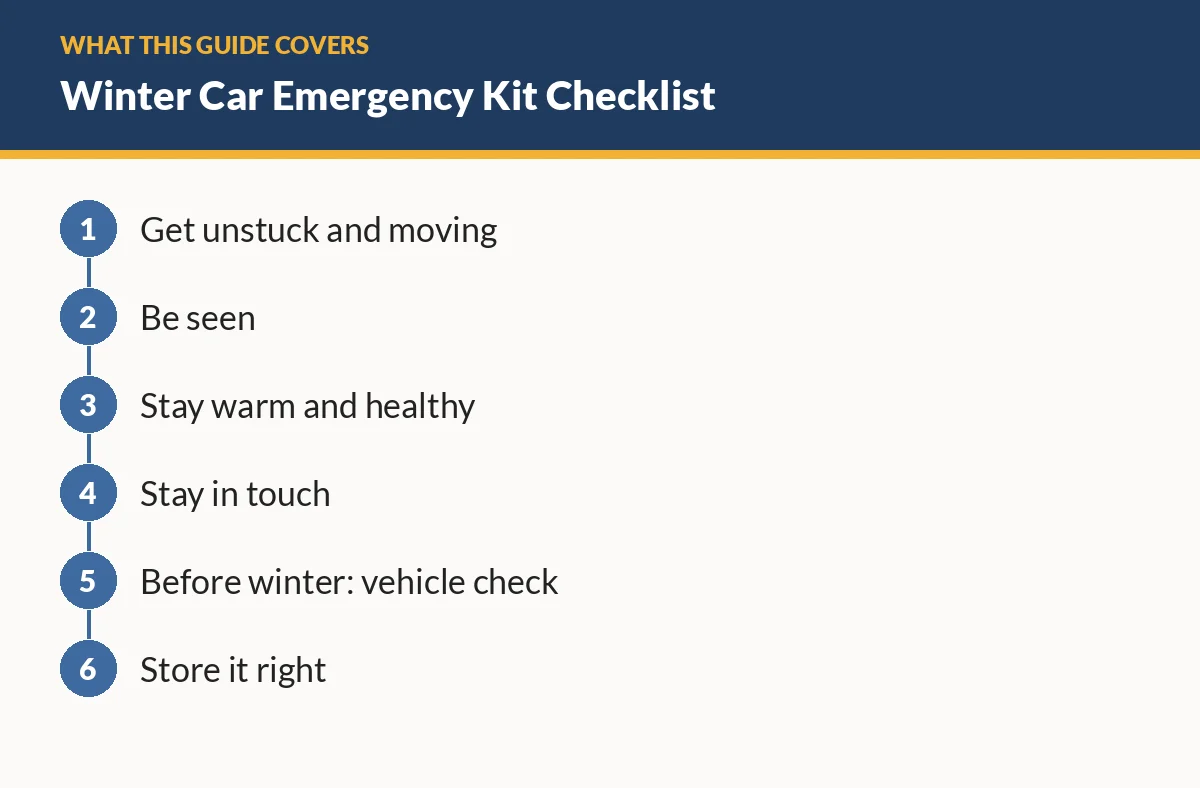
Get unstuck and moving
- [ ] Ice scraper and snow brush or broom: see scrapers compared
- [ ] Compact snow shovel Car snow shovels → Amazon
- [ ] Sand or cat litter for traction
- [ ] Jumper cables or a portable jump starter: see jump starters compared
- [ ] Traction devices if your area requires them: see chains vs. snow socks
Be seen
- [ ] Flares or reflective warning triangles Warning triangles → Amazon
- [ ] Flashlight with spare batteries
- [ ] Bright cloth to tie to the antenna or door (NWS suggests red)
Stay warm and healthy
- [ ] Blankets Emergency blankets → Amazon
- [ ] Warm clothes, hat, gloves, dry socks
- [ ] Water and non-perishable food
- [ ] First aid kit (NHTSA's list includes a tourniquet) First aid kits → Amazon
- [ ] Any necessary medicine
Stay in touch
- [ ] Phone car charger (NWS: leave with a fully charged phone)
- [ ] A paper map (Ready.gov)
Before winter: vehicle check
NHTSA and Ready.gov both suggest having a mechanic check:
- Battery and charging system (cold reduces battery power)
- Tires: pressure to the door-jamb label (not the sidewall max), tread at least 2/32 in, and the spare
- Coolant/antifreeze, heater, defroster
- Wipers and winter washer fluid with de-icer
- Lights and hazard flashers, brakes, exhaust system
- Open recalls (NHTSA's VIN lookup)
Store it right
Keep the kit in a bin or bag in the trunk, with the scraper and phone charger in the cabin. Check it every fall: swap food and water, test the flashlight, and recharge any jump starter.
Prefer a ready-made kit?
Pre-built kits are convenient, but compare their contents against this list; most need blankets, food, water, and medicine added. Browse winter car kits → Amazon
Printable checklist
| Category | Items | Done |
|---|---|---|
| Unstuck | Shovel, sand or cat litter, traction mats, tow strap | ☐ |
| Power | Jumper cables or a charged jump starter | ☐ |
| Visibility | Ice scraper and snow brush, flashlight, spare batteries, warning triangles or flares, bright cloth | ☐ |
| Warmth | Blankets, extra hats, gloves, socks, and boots | ☐ |
| Health | First aid kit, any needed medications | ☐ |
| Food and water | Water and nonperishable snacks | ☐ |
| Communication | Phone charger or power bank | ☐ |
| Fluids | Washer fluid rated for winter | ☐ |
Build it once, check it twice a year
Pick two easy dates, like the clock changes in spring and fall, to:
- Recharge the jump starter and power bank
- Swap expired water and snacks
- Test the flashlight and replace batteries
- Restock any first aid supplies you've used
- Put back any blanket or gloves that drifted into the house
Kits for different drivers
- Commuters on plowed highways: the basics above, with extra attention to phone power and visibility.
- Rural or mountain drivers: add more food, water, and warm layers, plus a shovel and traction aids. NHTSA notes that in winter, help can take longer to arrive.
- New or teen drivers: add a printed card with the stranded-in-snow steps and practice using the jumper cables or jump starter together.
- Families with kids or pets: extra blankets, snacks, water, and any comfort items.
Fuel and route habits
Ready.gov and NHTSA both stress preparation before you leave: keep the tank from running low, check the weather and road conditions, and tell someone your route. A full tank also matters if you're stuck and need to run the engine periodically for heat. Follow the carbon monoxide precautions.
FAQ
What should be in a winter car emergency kit?
NHTSA lists a snow shovel, broom, and ice scraper; sand or kitty litter; jumper cables, flashlight, and warning devices; a first aid kit; blankets; and a phone and charger, water, food, and any needed medicine.
Why keep the gas tank full in winter?
NHTSA advises keeping the tank close to full, and Ready.gov notes a full tank also helps keep the fuel line from freezing. It also gives you heat if you're stranded.
What about electric vehicles?
NHTSA says cold reduces EV range and batteries use power to self-heat; keep the battery charged and plug in overnight in freezing weather when you can.
Related guides
- Portable Jump Starters for Cold Weather: How to Choose
- Ice Scrapers and Snow Brushes: How to Pick One
- What to Do If You're Stranded in Your Car in Snow